Commercial air travel remains one of the safest modes of transportation. But accidents, though rare, offer vital insights into safety and human performance., thanks to advancements in aircraft design, pilot training, air traffic control, and safety regulations. General aviation doesn’t fare so well and for good reason. In most cases, the aircraft are different, the airports to which they operate may be largely different and the pilots may have greatly varying backgrounds and training. But in both segments, the problem areas remain stubbornly the same. It’s well-plowed ground but this book takes a slightly different slant
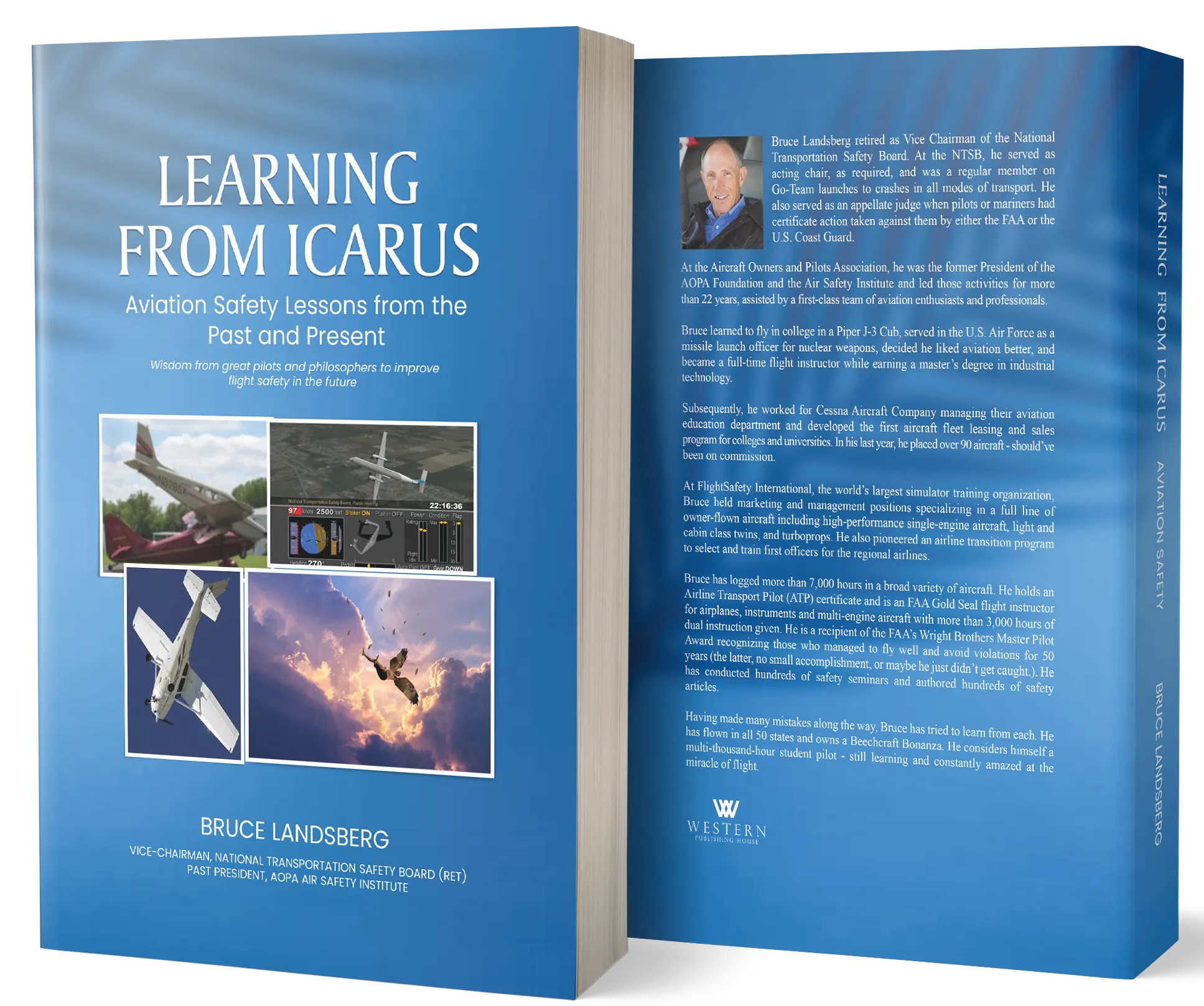
Bruce Landsberg’s Learning From Icarus combines the seriousness of a safety manual with the depth of a memoir. It is not only a compendium of what went wrong in dozens of real-life flights. It is an introspective journey into why smart people make catastrophic choices in the sky.
Landsberg’s voice is authoritative but never overbearing. As a former head of the AOPA Air Safety Institute, Vice Chairman of the NTSB, and multi-thousand hour pilot, he writes with both technical mastery and seasoned restraint. Each chapter in the book is structured to emphasize a specific aviation hazard. Weather, automation, takeoff and landing dynamics, or emergencies, this book underscores the core reasons for crashes.
According to Landsberg, aviation’s weakness is not a lack of knowledge but rather a failure to apply it consistently. What is disturbing about this book is the recurrence of known mistakes, such as VFR into IMC, poorly managed automation, or performance miscalculation. These aren’t quiet side cases. These are avoidable, recurrent, and tragically too commonplace.
Landsberg makes excellent use of case studies. The Quincy ground collision, the Cerritos midair, and the Buffalo crash are more than just historical footnotes. He unpacks each one with empathy and insight, pointing out what could have been done differently. The result is neither shaming nor sugarcoating. It’s a sober reflection with the goal of saving lives.
The book also touches on systemic issues such as fatigue in commercial pilots, inadequate regulatory oversight, and overconfidence among high-net-worth private aircraft owners. Landsberg doesn’t spare institutions. He praises what works and critiques what doesn’t, often referencing how the NTSB, FAA and the industry could (and should) work better together.
But perhaps the most memorable parts are the philosophical ones. Landsberg quotes everyone from Wilbur Wright to Yogi Berra, and those musings land with impact. The story of the pilot who died flying into IMC after declaring, “I can handle it” is haunting precisely because it’s familiar.
This is a book that should be required reading not just for pilots, but for anyone who designs systems, leads organizations, or faces risk-laden decisions. It’s a masterclass in how not to become a cautionary tale and how we can take action to save dozens, perhaps hundreds, of lives.
This book will offer you:
- Numerous crash analyses of corporate aircraft, commercial jets, turboprops, and light GA aircraft.
- Preparing for the rare emergency, technology management, weather, human factors, and the ever-present judgment challenges.
- Cautionary tales of complacency, overconfidence, and the “it won’t happen to me” mentality.
- Practical advice for both experienced aviators, students, and instructors.
- Advice to increase flight safety for both individuals and organizations
Whether you’re a seasoned pilot, flight instructor, aviation student, or simply passionate about flying, Learning from Icarus will help you think differently about flying and help you to operate smarter, safer, and be more prepared.
Order your copy on Amazon: https://www.amazon.com/dp/1968296557/